The short answer
A Brisbane installer publishes from $350 for one whirlybird supplied and installed and $650 for two, including GST; a Sunnybank contractor publishes A$450 to A$650 for one. One Brisbane installer publishes from $750 per solar vent, including GST. How many you need depends on the ceiling area under the roof, its pitch and whether air can get in at the eaves: the building code treats a roof as “vented” with one wind-driven ventilator per 50 m² of ceiling plus eave, gable or ridge vents (a definition for choosing insulation on new homes, not a sizing rule), and Brisbane installers publish one per 50–60 m² or one per 90 m². Government guidance says whirlybirds help ceiling insulation work and clear moisture, but no independent test we found puts a number on the cooling.
Whirlybird installation cost in Brisbane
Whirlybirds are one of the few roofing jobs priced openly per unit. The second and third units on the same visit cost less than the first, because the roofer is already up there with the gear.
Whirlybird installation and replacement prices in Brisbane
| Work | Published price | Who publishes it |
|---|---|---|
| One whirlybird, supplied and installed (tile, metal or Colorbond roof) | From $350 | Mike’s Whirlybirds |
| Each additional whirlybird, same visit (two for $650, three for $950) | +$300 | Mike’s Whirlybirds |
| Whirlybird replacement (swap) | From $350 | Mike’s Whirlybirds |
| Single whirlybird, installed | A$450 – A$650 | Brisbane Roof and Paint |
| Two or three whirlybirds, installed | A$950 – A$1,300 | Brisbane Roof and Paint |
| Double-storey home, added to the price | A$150 – A$300 | Brisbane Roof and Paint |
Checked 5 November 2026. Mike’s Whirlybirds is a Brisbane installer; its price table is undated, says “Prices include GST” and “Roof type and access conditions may affect final price”, and its Hamilton page uses the same text as its other suburb pages. Brisbane Roof and Paint is a Sunnybank contractor; its guide (updated 26 March 2026) doesn’t say whether GST is included, and its FAQ gives a lower single-unit figure (A$350 – A$650) than its main text.
Solar roof vent prices in Brisbane
| Work | Published price | Who publishes it |
|---|---|---|
| Solar vent, per unit, fully installed | From $750 | Mike’s Whirlybirds |
| Supply and install one SolarXvent | $985 plus GST | KWR Roofing |
| Solar units, installed | A$600 – A$1,000 | Brisbane Roof and Paint |
Checked 5 November 2026. Mike’s Whirlybirds’ price includes GST (undated). KWR Roofing is a Camp Hill contractor; its homepage prices are undated and exclude GST. Brisbane Roof and Paint’s figure is from the guide above (updated 26 March 2026), GST not stated.
By our arithmetic, three whirlybirds at Mike’s Whirlybirds’ published rate come to $950 ($350 + $300 + $300), and the same three at Brisbane Roof and Paint’s two-or-three band sit within A$950 to A$1,300.
What changes the price of a whirlybird job
Two storeys and steep roofs
Brisbane Roof and Paint adds A$150 to A$300 for a double-storey home. A steep roof or a highset Queenslander means more edge protection and slower work on the roof.
Tile or metal roof
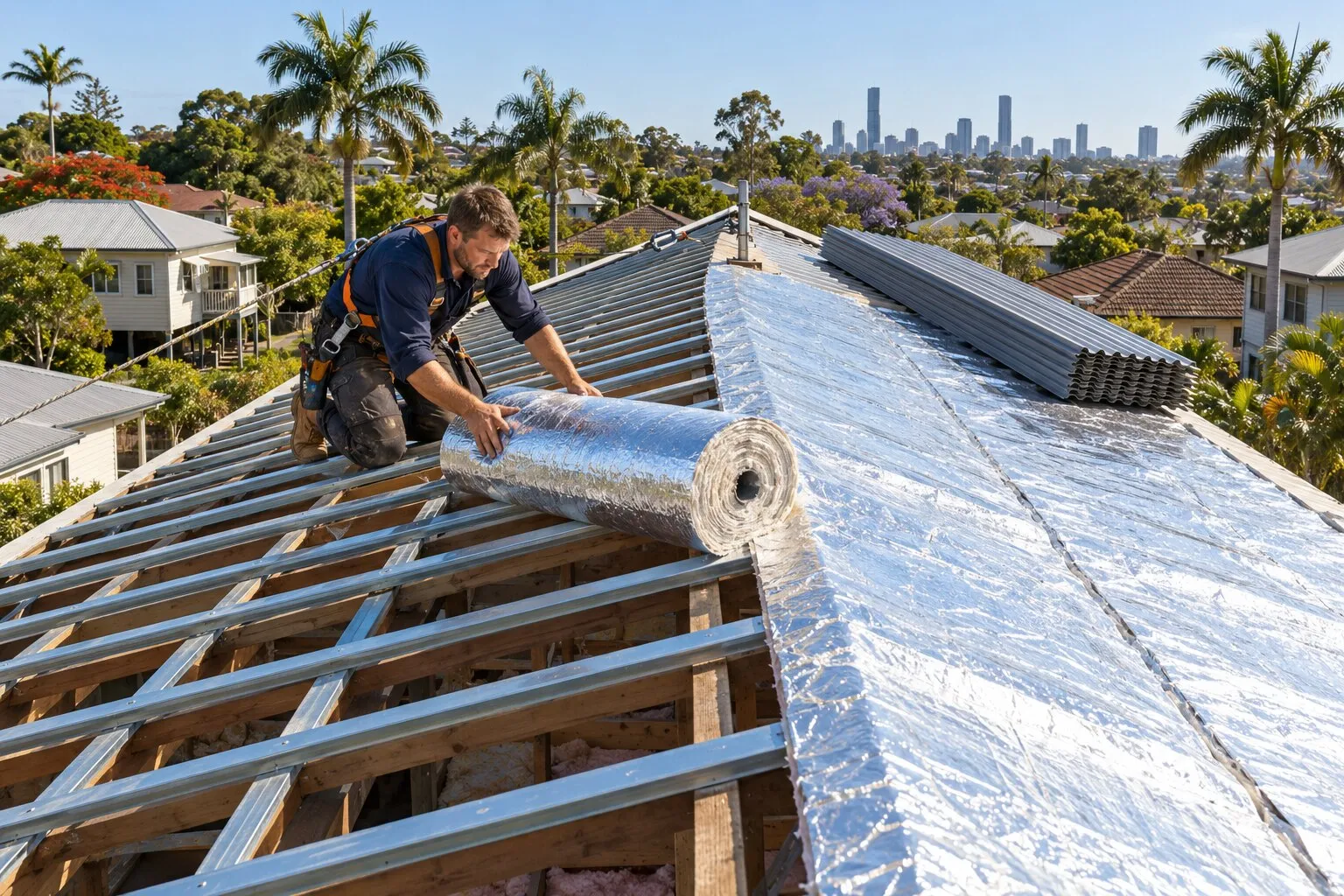
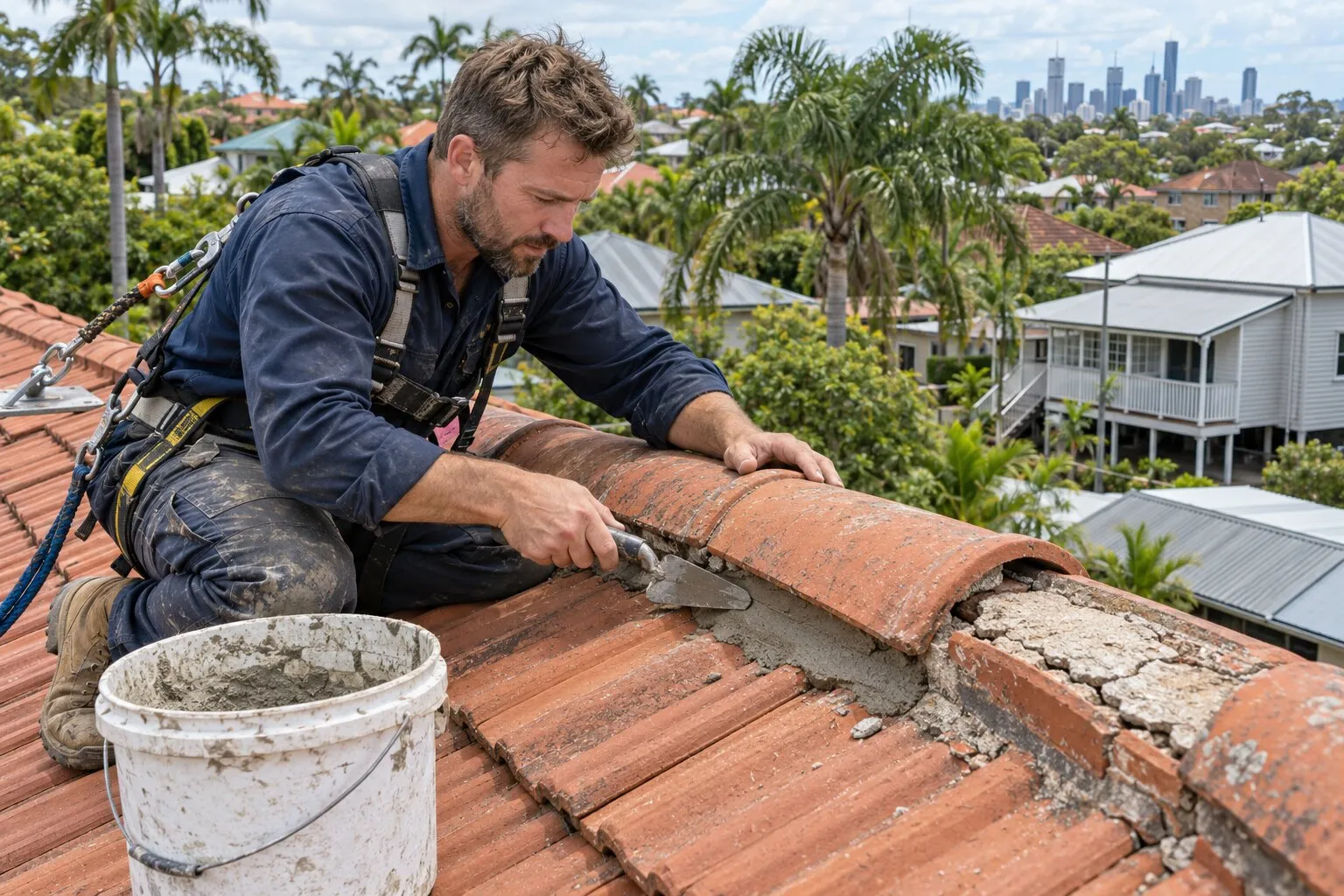
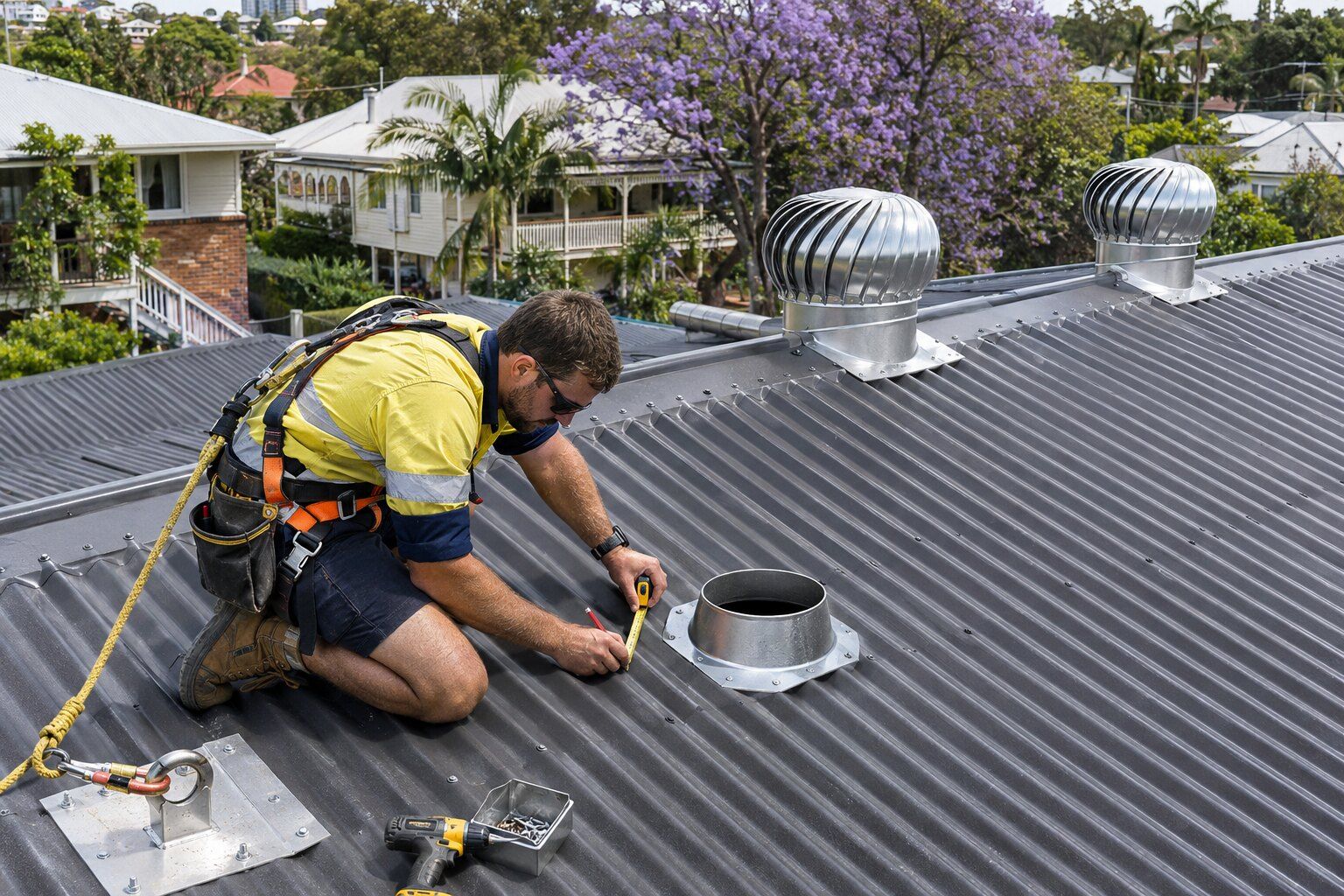
On a metal roof the base is flashed to the sheet profile and screwed down. On a tile roof, tiles are cut or lifted around the base and the flashing is dressed over the tiles below. Mike’s Whirlybirds quotes the same starting price for tile, metal and Colorbond roofs.
New opening or a swap
Replacing a noisy or seized whirlybird usually reuses the opening; Mike’s Whirlybirds lists a swap at the same starting price as a new unit. A new position means cutting the roof, checking for framing and wiring, and flashing a new base.
Fibro roofs
Older fibro roofs can contain asbestos, and cutting a hole in one for a whirlybird is a different job with its own rules; see the asbestos roofs guide before asking for a price.
How many whirlybirds do I need?
There’s no single rule. The building code, a New South Wales scheme, a manufacturer and two Brisbane installers each publish a different figure, for different purposes. Here they are side by side; the common thread is that the number goes up with the ceiling area under the roof, and that the vents only work with somewhere for air to come in.
Published guidance on how many whirlybirds a roof needs
| Publisher | What it says | What it’s for |
|---|---|---|
| ABCB Housing Provisions (NCC 2022) | A roof is “vented” if it has “one wind-driven roof ventilator per 50 m² of ceiling area, with gable, eave or ridge vents”, or one powered ventilator per 200 m² | Choosing the ceiling insulation for new work; not a sizing rule |
| Mike’s Whirlybirds (Brisbane installer) | “one 300mm unit suits approximately 50–60m² of ceiling area”; “Most Brisbane homes need 2–4 whirlybirds depending on roof size and pitch” | An installer’s rule of thumb (undated) |
| Brisbane Roof and Paint (Sunnybank contractor) | “one 300mm whirlybird for every 90 square meters of roof space”; 2 to 3 for a 180 m² roof | An installer’s rule of thumb (March 2026), measured on roof area, not ceiling |
| CSR Bradford (manufacturer) | Under 62 m² of ceiling: one WindMaster and five eave vents on a roof steeper than 22°, two ventilators on a flatter roof | Condensation control under the superseded 2019 code, where exhaust fans vent into the roof |
| NSW BASIX (New South Wales only) | “one ventilator for every 100 m² of ceiling (or part thereof)”, plus eave or gable vents of at least 0.2% of the ceiling area | A New South Wales energy rule; it doesn’t apply in Queensland |
Checked 5 November 2026. Each row is quoted or closely paraphrased from its publisher; the figures are not combined. Bradford’s newer tables cover only the cold climate zones 6 to 8, and Brisbane is climate zone 2.
Before you agree to a number, ask the roofer what ceiling area they’ve measured, where each unit will sit, and whether the eaves already have vents. A low-pitched roof can need more units than a steep one of the same size.
Do whirlybirds work?
For moisture and for helping insulation do its job, the Australian Government says they can help. Its YourHome guide says “Ventilators such as whirlybirds can reduce the temperature differential across ceiling insulation, increasing its effectiveness”, and that well-ventilated roof spaces “contribute to passive cooling by providing a buffer zone” under the roof.
Moisture matters as much as heat. YourHome says that as houses have become more airtight, “the risk of condensation has been exacerbated”, and that a well-ventilated roof space removes “excess water vapour from the roof space to avoid mould”. Lysaght, the roofing manufacturer, says damp insulation loses efficiency “markedly” and recommends “passive ventilation” to remove moisture.
What nobody has shown independently is how many degrees a whirlybird takes off a Brisbane roof space or a power bill. Installer pages quote large temperature and savings figures without citing a test, so treat them as sales claims. YourHome pairs roof-space ventilation with foil insulation and light-coloured roofing, which it says limit radiant heat flow into the roof space.
Eave vents: whirlybirds need air coming in
A whirlybird can only pull air out of the roof space as fast as air gets in. The building code’s “vented” roof pairs the ventilators “with gable, eave or ridge vents”, and Bradford’s ventilator tables list eave vents with every whirlybird. Bradford says its eave vents “draw cooler outside air into the roof space” and, used with roof vents, “create cross-flow ventilation”.
Eave vents are fitted to the eave lining. If your eaves are solid, ask for them to be priced in the same quote.
Living near the river or the bay
Check the product suits your street. Bradford says its WindMaster “is not suitable for use within 500m of a saltwater body”, and that it isn’t made for the cyclonic wind regions of north Queensland. If you live near tidal water, ask the roofer which unit and finish they’d fit, and what the maker says about your distance from the water.
Common questions
Does a whirlybird suit a low-pitched roof?
It depends on the product. Bradford rates its WindMaster for tiled roofs from 15° to 45° and metal sheet roofs from 3° to 45°, and its older condensation tables call for twice as many ventilators on roofs of 22° or less.
Does whirlybird installation need a QBCC-licensed roofer?
Flashing ventilators through a roof is in the QBCC roof and wall cladding class. A contractor licence is required for building work valued over $3,300; most one- or two-unit whirlybird jobs priced above fall below that, while a larger ventilation job may not. Either way you can check a roofer on the QBCC licensee register.
Where this information comes from
The prices, rules and advice on this page come from these published pages, checked on 5 November 2026.
- Mike’s Whirlybirds: whirlybird installation prices (homepage and Hamilton page) · Brisbane whirlybird installer, undated; the same text appears on its other suburb pages
- Brisbane Roof and Paint: cost of whirlybird installation in Brisbane, 2026 price guide · Brisbane roofing contractor (Sunnybank), published 25 March 2026, updated 26 March 2026
- KWR Roofing: homepage roof vent prices · Brisbane roofing contractor (Camp Hill), undated
- ABCB Housing Provisions (NCC 2022), Part 13.2 Building fabric, Table 13.2.3c notes · Australian Building Codes Board, NCC 2022 (in force in Queensland until NCC 2025 is adopted on 1 May 2027)
- NSW Planning Portal: BASIX roof space ventilation · NSW Government, last updated 4 March 2026 (a New South Wales scheme; it doesn’t apply in Queensland)
- CSR Bradford: WindMaster product technical statement (PTS503 Issue K) · Roof ventilator manufacturer, PDF dated 14 May 2026
- CSR Bradford: eave vents · Roof ventilator manufacturer’s product page, undated
- YourHome: passive cooling · Australian Government guide to sustainable homes, undated
- YourHome: insulation · Australian Government guide to sustainable homes, undated
- Lysaght: condensation management · Roofing manufacturer (BlueScope) technical page, undated
- QBCC: roof and wall cladding licence class · Queensland Building and Construction Commission, last reviewed 31 August 2021
- QBCC licensee register · Queensland Building and Construction Commission’s public register