The short answer
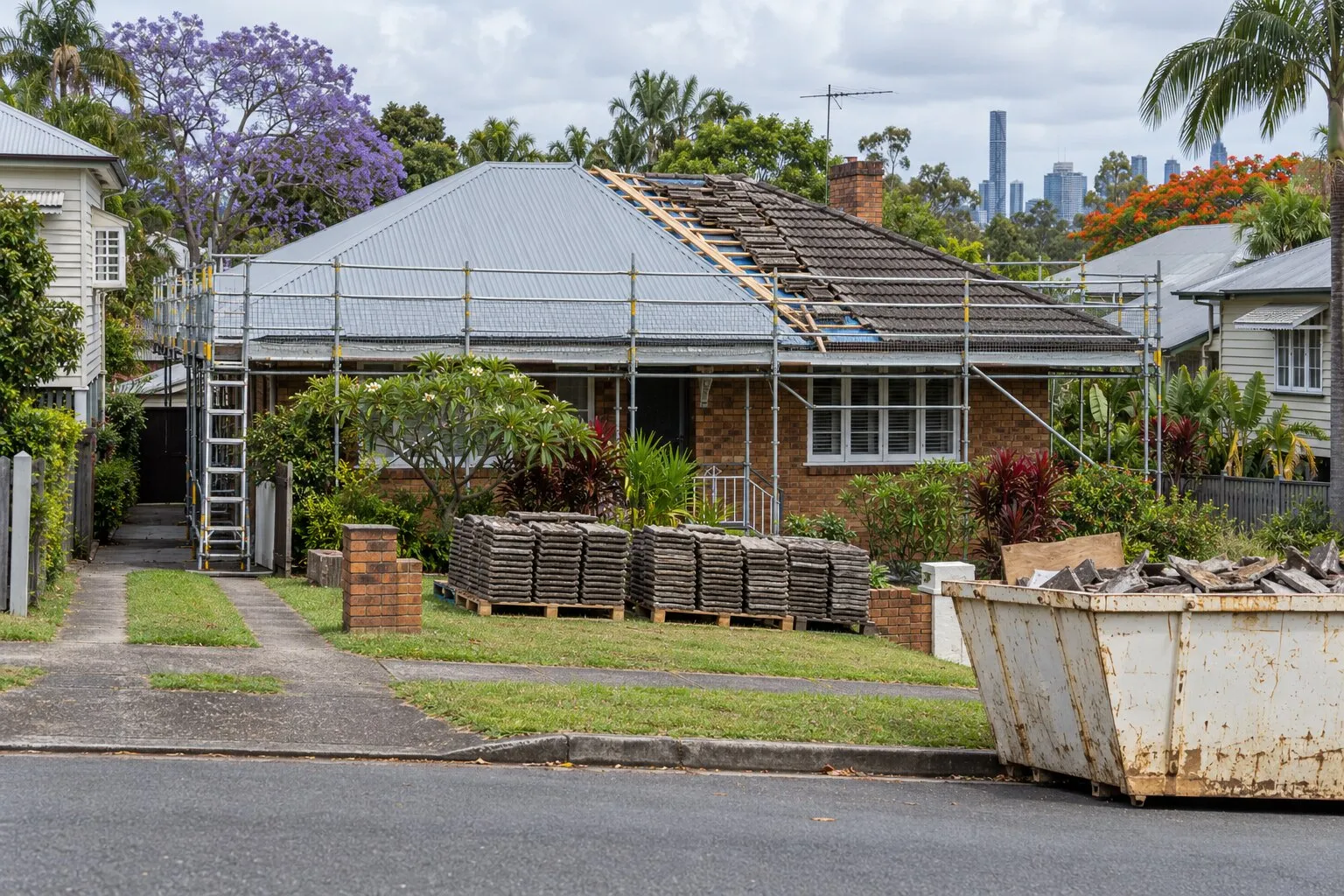
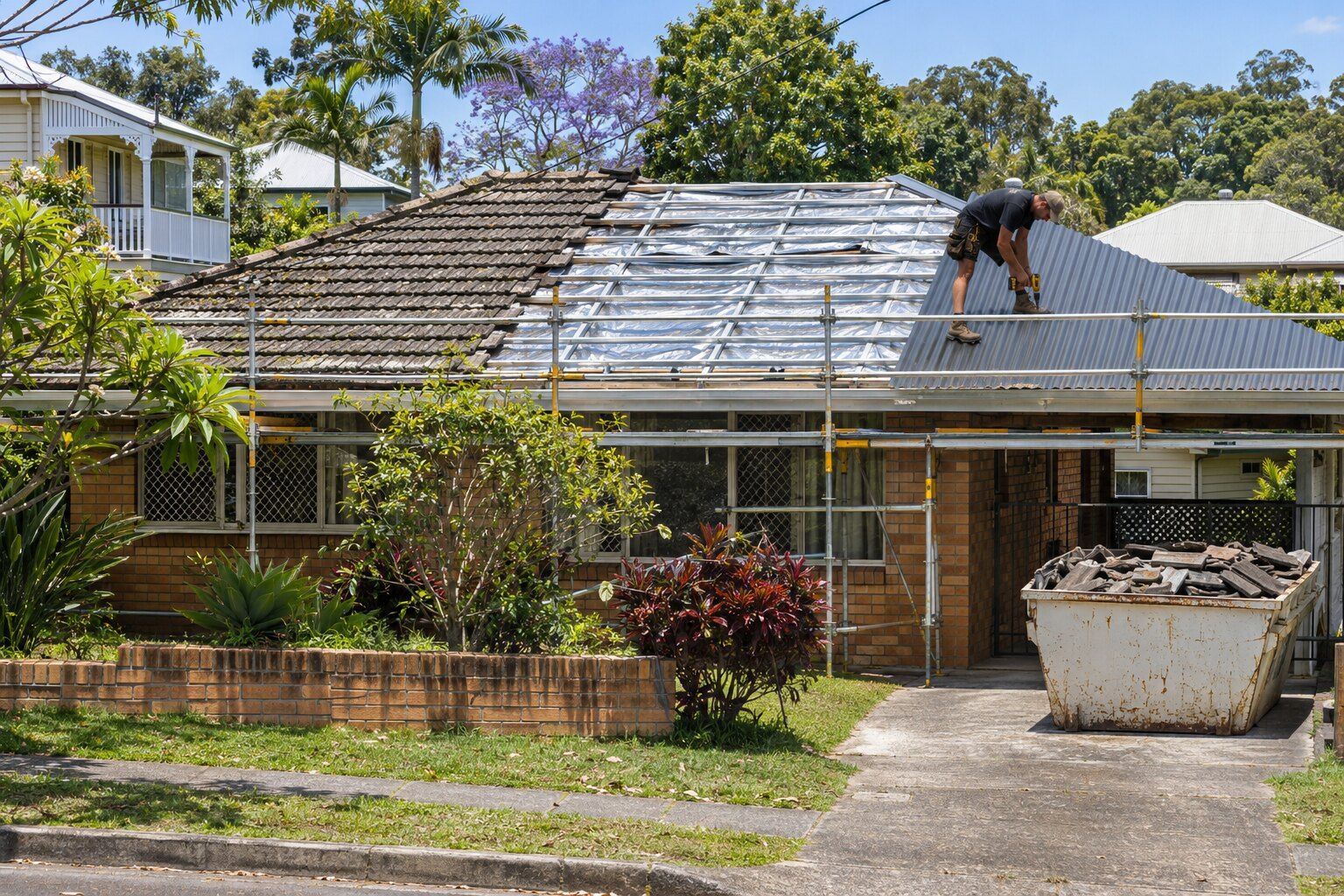
Yakka Labour’s Brisbane rate for changing tiles to Colorbond is $100 to $160 per m² including GST. A northside Brisbane roofer publishes $100 to $115 per m² as a base rate, which excludes insulation, engineering and scaffolding, and $23,000 to $28,000 “all-in” for a 180 m² house. The same roofer puts engineering fees at $1,000 to $3,000+ and certification at $800 to $2,500 when a tiled re-roof needs them. The work costs more than a metal-to-metal re-roof because the tiles and timber battens come off and a much lighter roof has to be held down by its fixings, so the battens and tie-down are checked.
Tile to Colorbond roof cost per m² and per house
Most Brisbane price guides give a rate per square metre of roof. Roof area is larger than the floor area, because of the eaves and the pitch, so ask the roofer for the roof area they’ve measured.
Tile to Colorbond prices in Brisbane
| Work | Published price | Who publishes it |
|---|---|---|
| Tile to metal, base rate: tiles and battens removed, new metal battens and roofing, not including insulation, engineering approvals or scaffolding | $100 – $115 per m² | Fortified Roofing Group |
| Tile to metal on a 180 m² house, “all-in” (insulation, engineering certification, scaffolding, skip and compliance paperwork) | $23,000 – $28,000 | Fortified Roofing Group |
| Tiles to Colorbond, per m² (Brisbane row) | $100 – $160 per m² | Yakka Labour |
| Concrete or terracotta tiles to Colorbond, typical 200 m² home (national) | $20,000 – $34,000 | Yakka Labour |
Checked 5 November 2026. Fortified Roofing Group is a northside Brisbane contractor (Geebung); its tile-to-metal post was updated 18 November 2025 and doesn’t say whether GST is included. Yakka Labour is a labour-hire company’s national cost guide (published 1 October 2026); its figures “include GST”, and the last row is from its national table, not its Brisbane row.
By our arithmetic, Yakka Labour’s Brisbane rate on a 180 m² roof comes to $18,000 to $28,800 (180 × $100; 180 × $160), before any extras that aren’t in its rate.
What a tile to Colorbond price should include
Fortified’s base rate covers stripping the tiles and timber battens, new metal battens and the new roofing, and leaves out insulation, engineering approvals and scaffolding; its all-in figure adds them back. Quotes differ most on what’s left out, so ask for each of these as its own line:
- Tile and batten removal, the skip and disposal
- New metal battens and how they’re fixed to the rafters or trusses
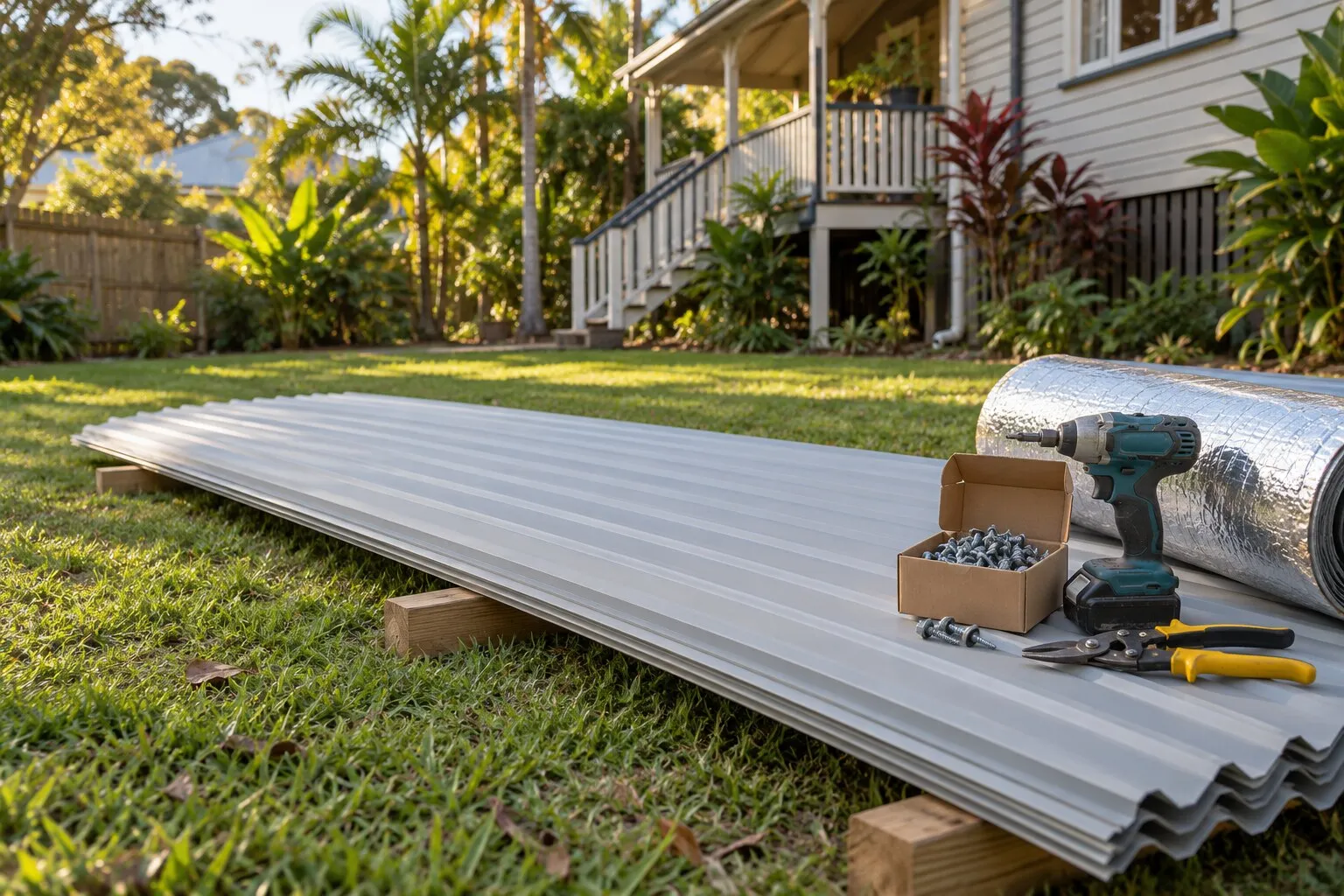
- Sarking or an insulation blanket under the sheets
- Colorbond sheets, ridge capping, flashings and valleys
- Tie-down checks and any upgrade work, with engineering or certifier fees if needed
- Scaffold or edge protection, new gutters, and lifting off and refitting solar panels
Published prices for scaffold, gutters, battens and solar remove-and-refit are in the roof replacement cost guide.
Tie-down when you replace tiles with Colorbond
A tile roof is heavy enough that its weight helps hold it down; a steel roof is roughly a tenth of the weight (the figures are in the Colorbond vs tile guide). That changes what holds the roof on in a storm. Timber Queensland’s technical sheet on wind tie-down, published by the QBCC, says “Even at low wind speed classifications such as non-cyclonic N2, sheet roofed houses will have net wind uplift forces that need to be tied-down with specific tie-down connections.” It adds that “failure of one link in the tiedown chain can lead to loss of a whole roof in a wind event”, and that the connection of battens to rafters and trusses needs “Special attention” at “high local pressure areas such as hips”.
The Australian Government’s resilience library lists “replacing tile roofs with sheet roofs” as a topic for builders, and says “the tie-down must be appropriate for the wind classification”. Each house’s wind classification is set for its own site, so ask the roofer or certifier what it is for yours.
- Ask how the battens will be fixed to the rafters or trusses, and how the rafters are tied to the walls.
- Ask what happens if the frame’s connections aren’t up to the new roof, and how that work is priced.
- Ask whether an engineer or a building certifier is involved, and who arranges them.
Engineering and certification fees on a tiled re-roof
| Fee | Published price | Who publishes it |
|---|---|---|
| Engineering fees on a tiled re-roof | $1,000 – $3,000+ | Fortified Roofing Group |
| Certification fees on a tiled re-roof | $800 – $2,500 | Fortified Roofing Group |
From Fortified’s tiled roof replacement post for Brisbane and South East Queensland (updated 12 January 2026), checked 5 November 2026. GST not stated. Whether your job needs either depends on the roof and the certifier. No one in Brisbane publishes a price for the tie-down work itself.
No Brisbane roofer publishes a price for tie-down upgrades; it depends on what’s found once the tiles are off. When roof work needs building approval, and the questions to ask about older houses, are in the roof replacement approval guide.
Sarking and insulation blankets under the new sheets
The ABCB’s energy-efficiency rules count a tiled roof with no sarking as a “vented” roof. A steel roof doesn’t get that treatment, and moisture can condense on the cold underside of the sheets. Lysaght, the steel roofing maker, says “a vapour barrier is often used to prevent contact of warm moist air with the roofing”, and that foil laminate “must be draped between roof supports so that the cold cladding is not in contact with the laminate (except at the supports)”.
Which product to choose, and the R-values for Brisbane, are in the sarking and Anticon guide; its cost section has the published prices.
Asbestos on a tile-roofed house
The Queensland Government’s list of where asbestos cement was used on the outside of houses doesn’t include concrete or terracotta tiles, but it does name “roof sheeting and capping, guttering, gables, eaves/soffits, water pipes and flues”. On a house built before 1990, ask the roofer whether any flashings, capping, eaves lining or flue around the roof could be asbestos cement, and how they would handle it before work starts.
The asbestos roofs guide covers testing and the rules on cutting or drilling it.
Common questions
Is it cheaper to restore the tiles than to change to Colorbond?
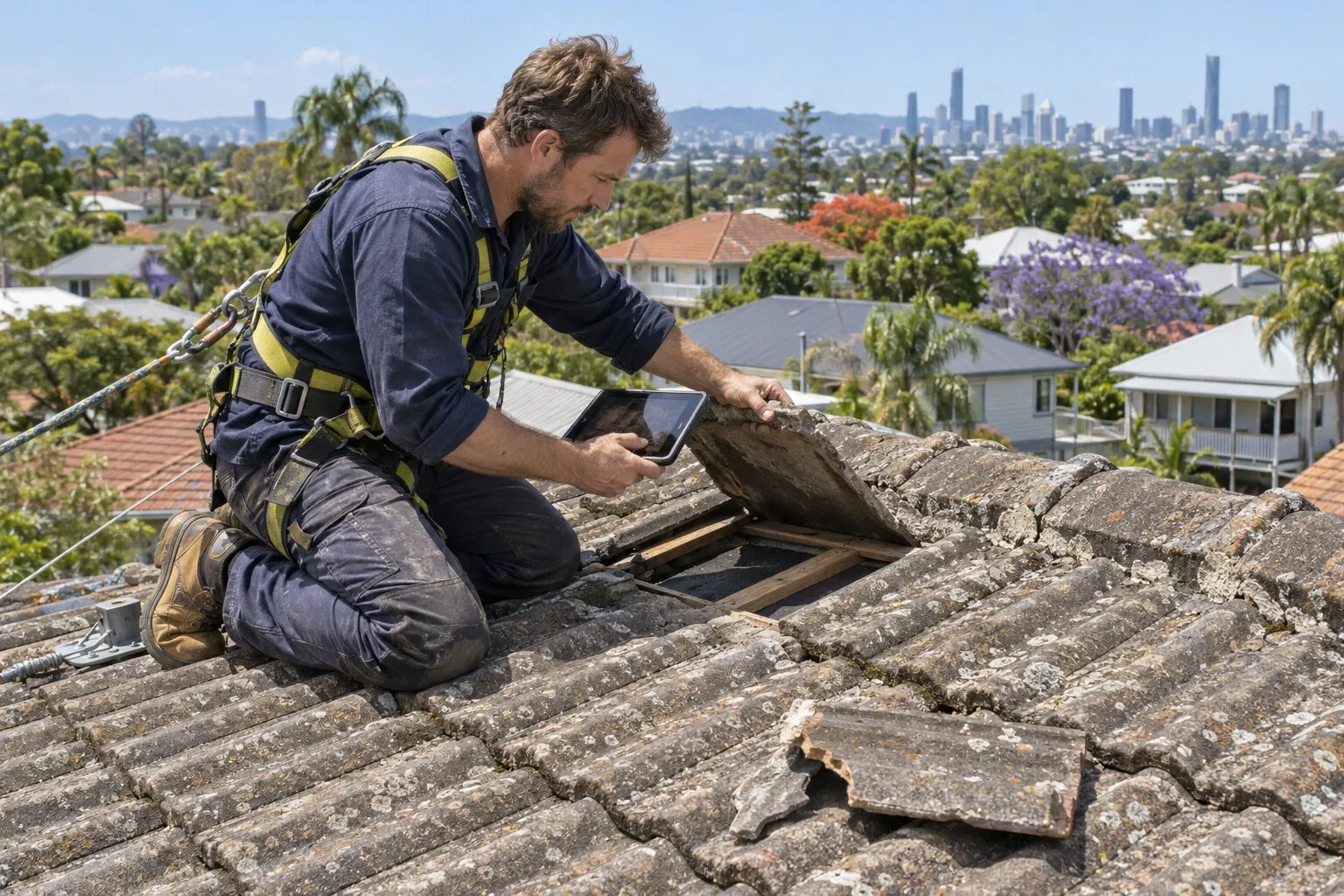
Compare the published Brisbane restoration prices in the roof restoration cost guide with the conversion figures here. A restoration only makes sense if the tiles, battens and frame are sound, so ask the roofer to tell you in writing whether they are.
Do I need council approval to change a tile roof to Colorbond?
Building approval depends on how much of the roof is replaced and what structural work is done; the roof replacement approval guide explains the rules. On a house in Brisbane City Council’s character overlay, a change of roof material is worth checking with Council first; see the guide to re-roofing a Queenslander.
Who can replace a tile roof with Colorbond in Queensland?
Fitting the new metal roof is QBCC roof and wall cladding work, and a contractor licence is needed for building work valued over $3,300, which a conversion is well over. Check the roofer’s licence and class on the QBCC licensee register.
Where this information comes from
The prices, rules and advice on this page come from these published pages, checked on 5 November 2026.
- Fortified Roofing Group: tile to metal roof replacement costs in Brisbane · Brisbane northside roofing contractor (Geebung), published 19 June 2025, updated 18 November 2025
- Fortified Roofing Group: tiled roof replacement cost Brisbane · Brisbane northside roofing contractor (Geebung), published 2 January 2026, updated 12 January 2026
- Yakka Labour: roof replacement cost guide · Labour-hire company’s national cost guide with Brisbane rows, published 1 October 2026
- Yakka Labour: Colorbond roofing cost guide · Labour-hire company’s national cost guide with Brisbane rows, published 1 October 2026
- Timber Queensland technical data sheet 32: wind tie-down connections (hosted by QBCC) · Timber industry body’s technical sheet, revised June 2016, published on the QBCC website
- NEMA National Resilience Action Library: replacing roofing on houses (builders) · National Emergency Management Agency (Australian Government), last updated 6 December 2024
- ABCB Housing Provisions (NCC 2022), Part 13.2 Building fabric, Table 13.2.3c notes · Australian Building Codes Board, NCC 2022 (in force in Queensland until NCC 2025 is adopted on 1 May 2027)
- Lysaght: condensation management · Roofing manufacturer (BlueScope) technical page, undated
- Queensland Government: how was asbestos used · Queensland Government asbestos website, undated
- QBCC: roof and wall cladding licence class · Queensland Building and Construction Commission, last reviewed 31 August 2021
- QBCC licensee register · Queensland Building and Construction Commission’s public register